
8-Aspects of Guru Rinpoche
8-Aspects of Guru Rinpoche
Share
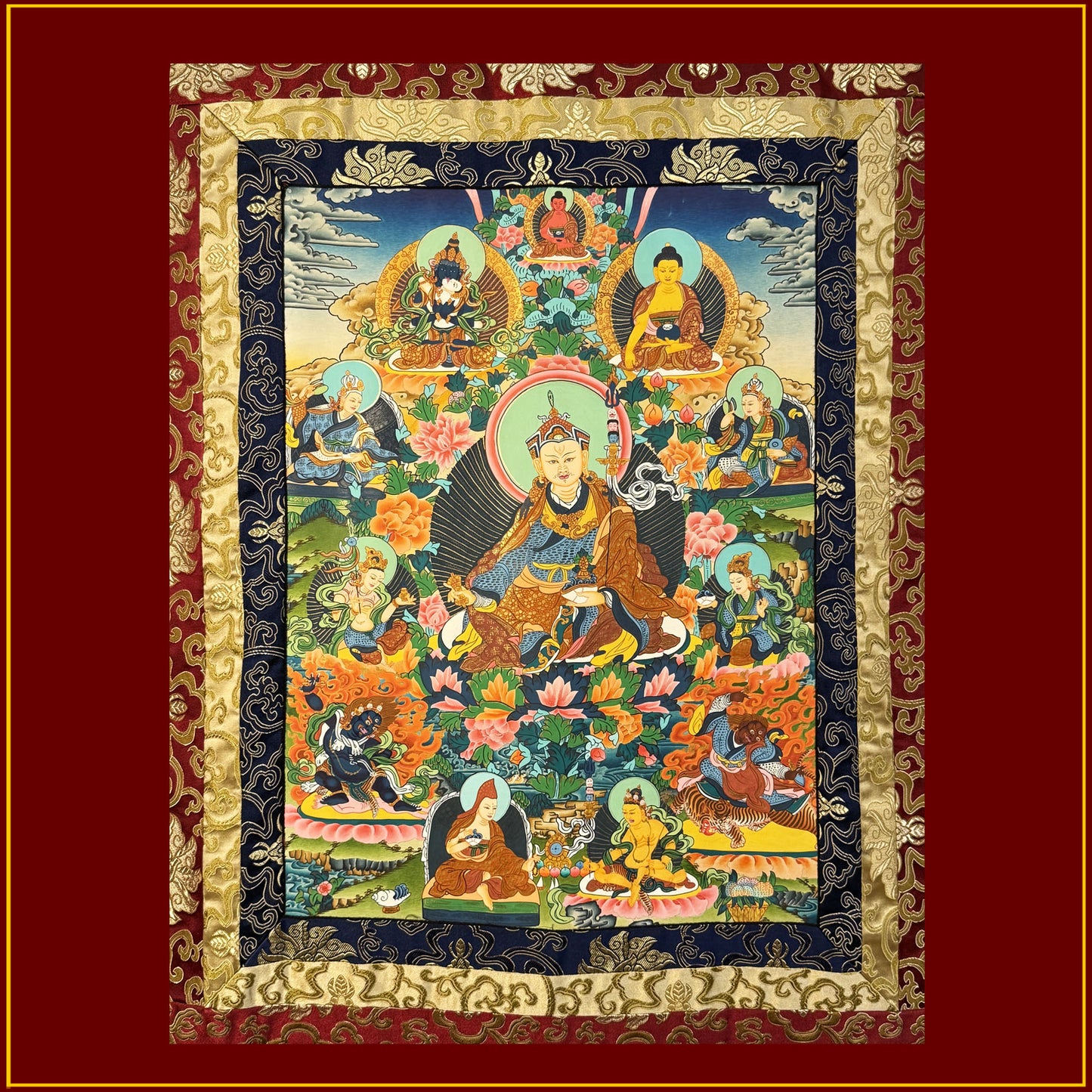
At the center of this thangka sits Guru Rinpoche—Padmasambhava, the “Lotus-Born” master who established Vajrayana Buddhism in Tibet. Surrounded by luxuriant flowers and luminous halos, he appears serene yet powerful, holding the vajra and skull cup while the trident rests against his shoulder. These implements express the inseparability of compassion, wisdom, and fearless spiritual power.
Around him are his Eight Aspects, traditionally called the Guru Tsengyé. They are not separate beings, but manifestations associated with different events, places, and periods in Guru Rinpoche’s sacred life. Some appear as peaceful teachers, monks, scholars, kings, and yogins; others assume fierce forms surrounded by flames. Together they show that awakened wisdom is not confined to a single appearance. It may teach gently, rule majestically, practice in solitude, engage in enlightened activity, or become wrathful when powerful obstacles must be overcome.
The peaceful manifestations communicate through learning, meditation, beauty, and compassion. The wrathful forms—such as Dorje Drolö and Senge Dradok—do not represent ordinary anger. Their flames, dynamic postures, and terrifying expressions symbolize the fierce energy of compassion destroying ignorance, pride, fear, and harmful forces.
The painting may therefore be understood as a portrait of enlightened adaptability. Guru Rinpoche appears in whatever form is needed to awaken beings. At the still center and within every surrounding manifestation is the same awakened mind—limitless in wisdom, compassion, and skillful means.
Painting Size: 15 in. x 22 in
Brocade Size: 26 in. x 40 in.
Couldn't load pickup availability
Share